Couples budgeting · Option 1 · Recommended
Joint, with money of your own
This is the approach we recommend, and the one the couples budgeting guide makes the case for. Both paycheques go into one joint account, you plan the shared spending together, and each of you gets a personal amount that's yours to spend, no questions asked.
How it works
- Combine all income. Both paycheques go into a joint chequing account, so every dollar starts in the same place.
- Plan shared expenses together. At a short monthly meeting, give every dollar a job: bills first, then debt and savings. Big joint purchases get talked through, and savings are shared.
- Budget for personal spending. Each of you gets a set amount every month, moved to an account of your own. Spend it, save it, or let it roll over.
The personal amount can be equal, or based on each person's income. We recommend equal: it reinforces the idea that it's all “our” money, whoever earns more.
Is it right for you?
It suits most couples who share a household. You work as a team on everything that matters to both of you, and each of you still has money that's entirely your own, so small personal purchases never need a conversation.
Putting it together: Alex and Sam in Dollero
Alex earns $4,500 a month after tax and Sam earns $3,000. Here's how they set this up in Dollero: one shared Household budget for everything they plan together, and a personal budget each for the $300 that's theirs to spend.
-
Create a shared Household budget
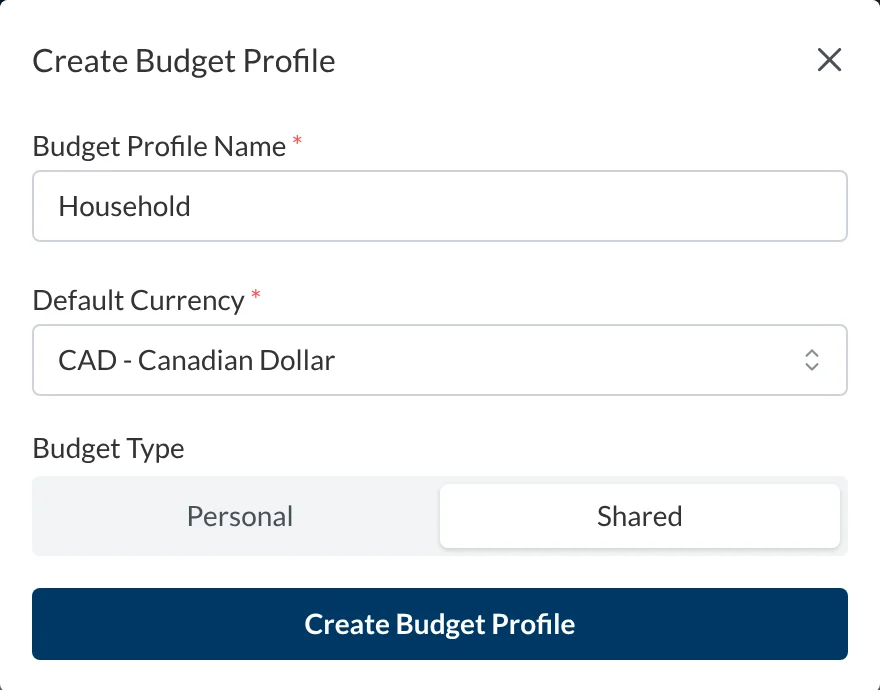
Open the app menu and choose New Budget. Name it Household and set the type to Shared, so you both see and edit it. Then invite your partner from Household Members in the same menu. You each sign in with your own login, on your own devices.
-
Send both paychecks to the joint account
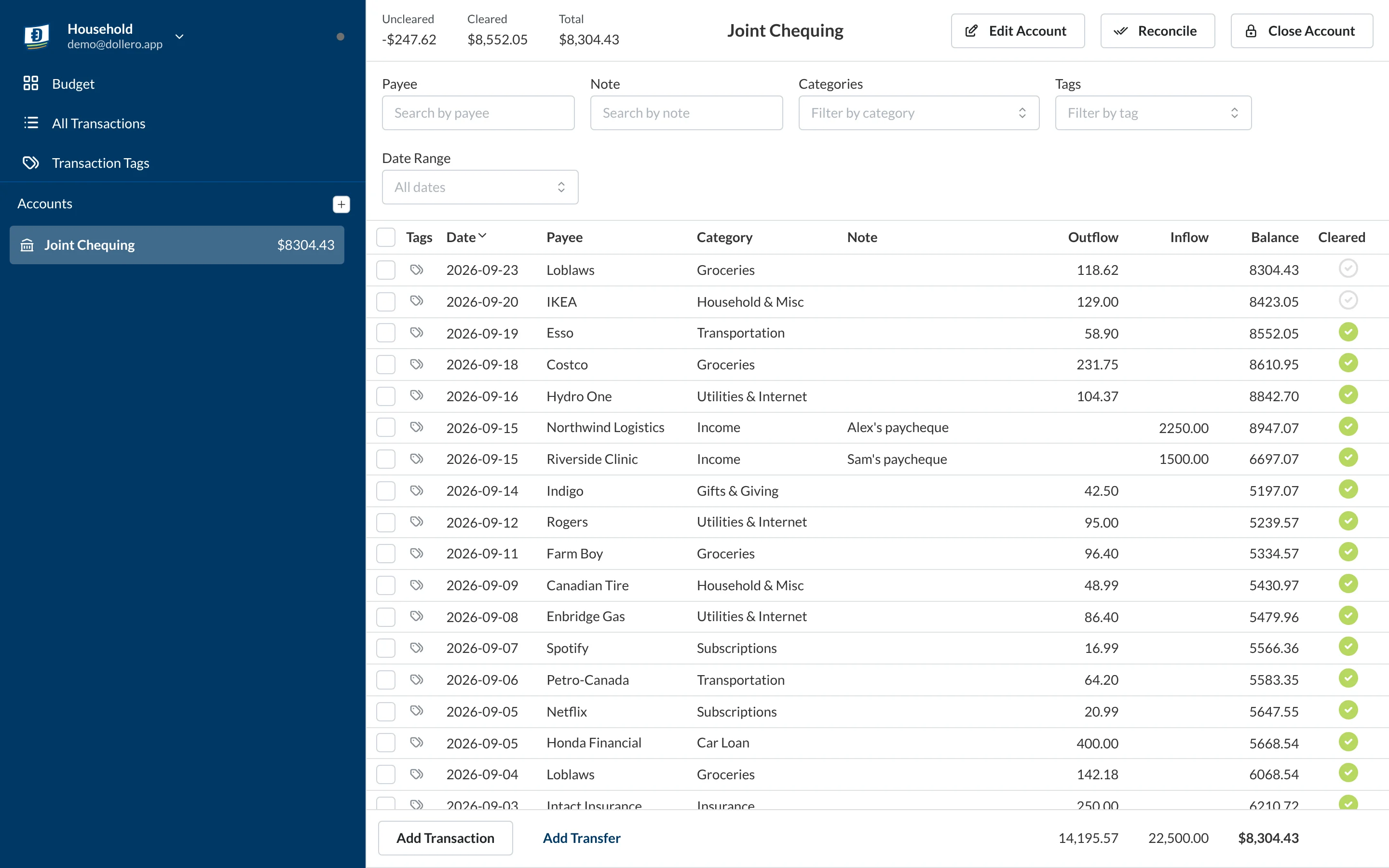
Add your joint account to the Household budget. Both paychecks land there, so every dollar starts in the same place: Alex's $2,250 and Sam's $1,500, twice a month, for $7,500 in total.
-
Plan the month together
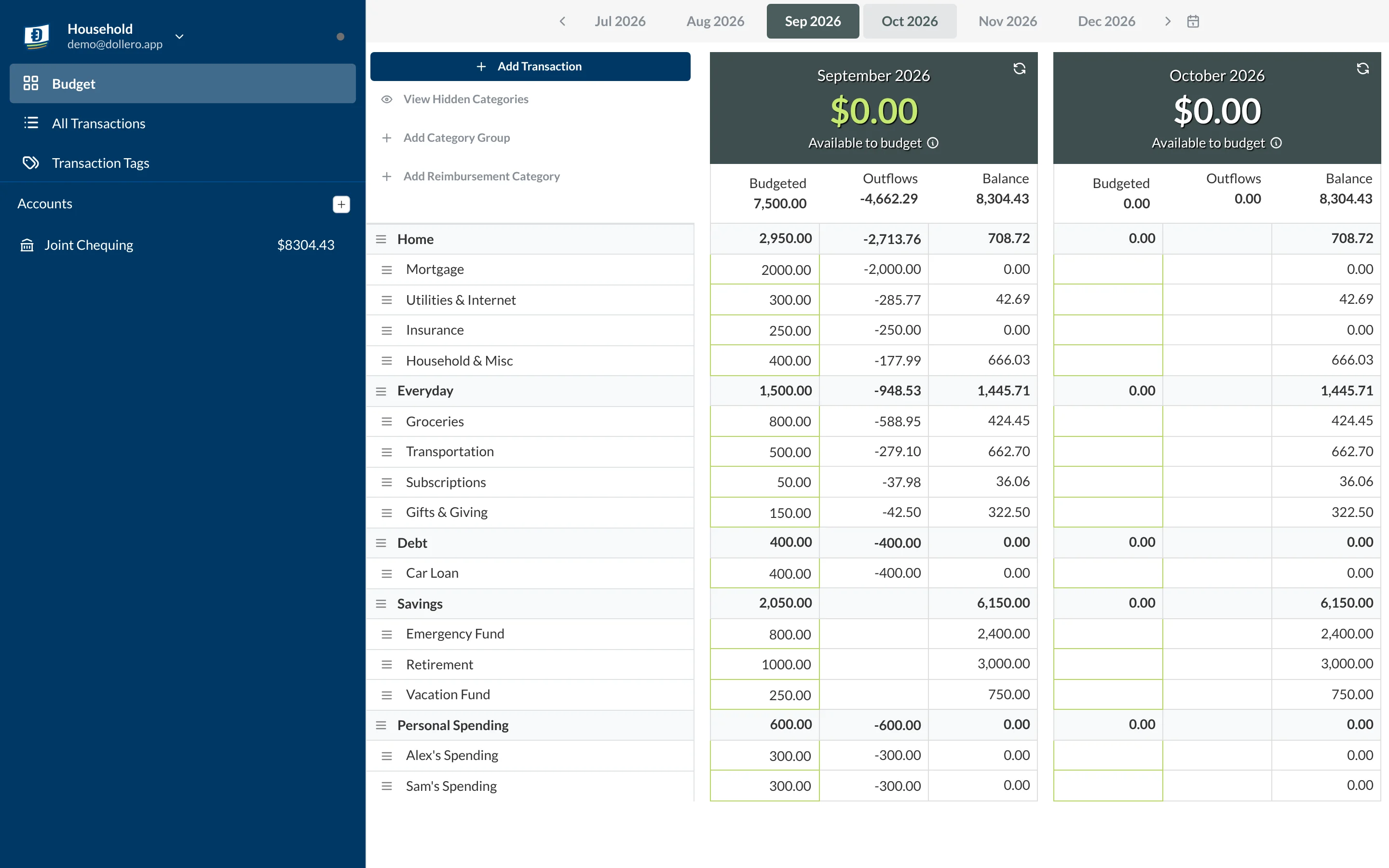
At their monthly budget meeting, Alex and Sam give every dollar a job: bills first, then debt and savings. Their personal money gets a category of its own too, Alex's Spending and Sam's Spending, at $300 each. When Available to budget reaches $0, the whole $7,500 has a plan.
-
Create a personal budget for each of you
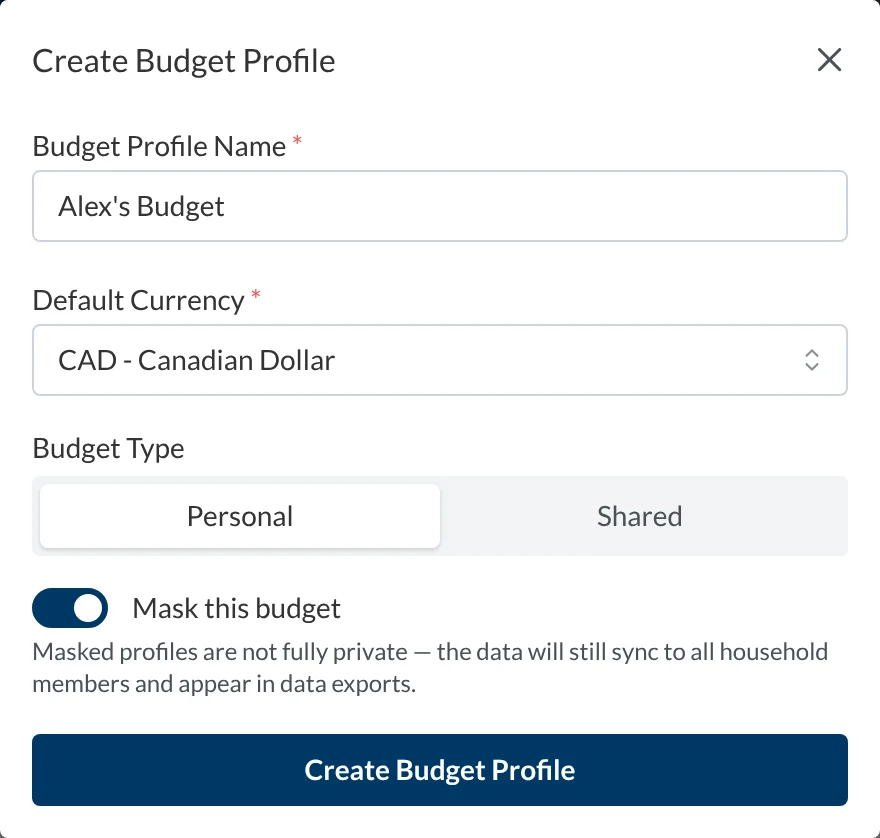
Each partner creates a Personal budget with an account of their own, here Alex's Chequing and Sam's Chequing. Turn on Mask this budget if you'd rather your partner didn't see the details. It's your money, so nobody needs to review it.
-
Move each person's money across
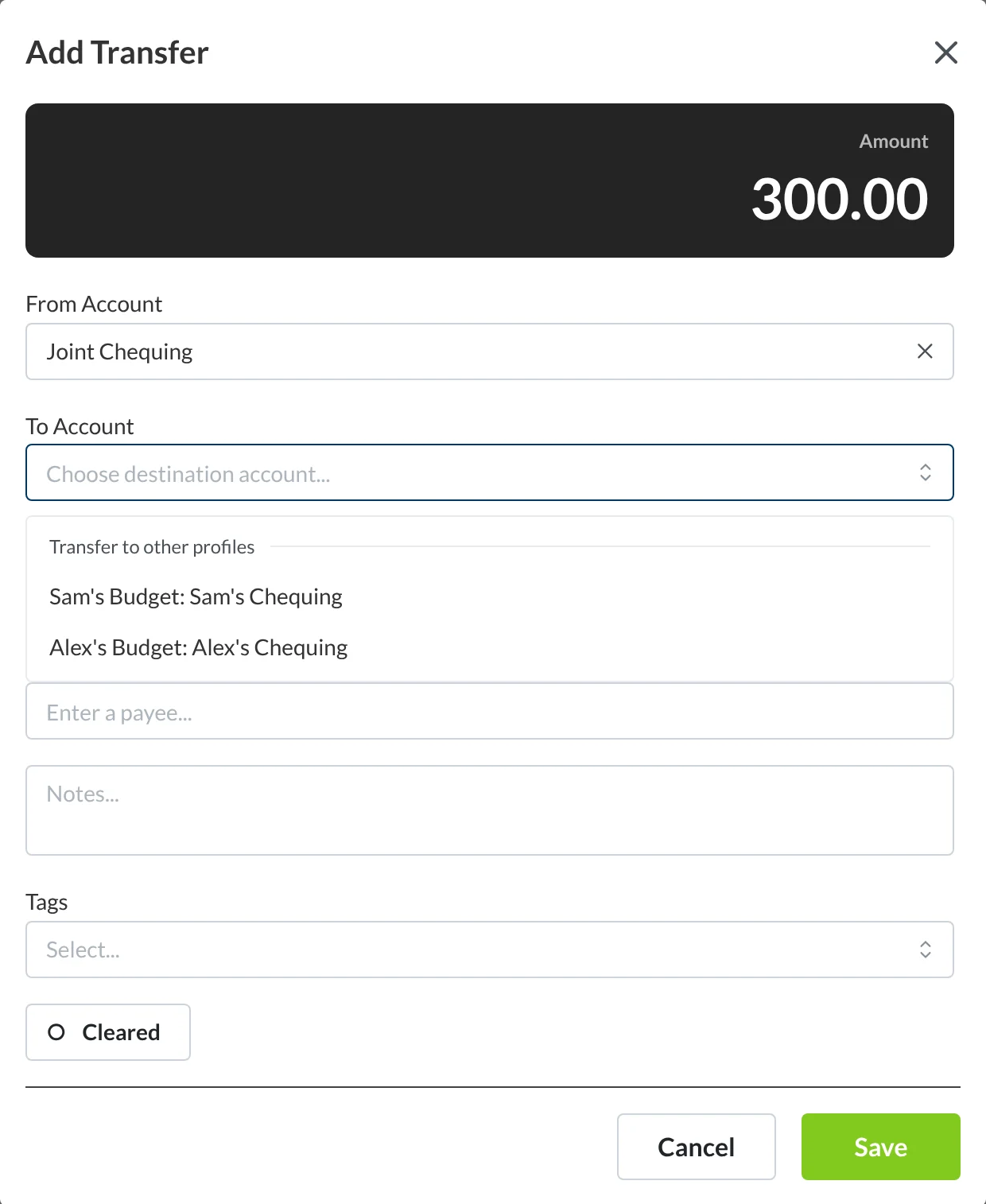
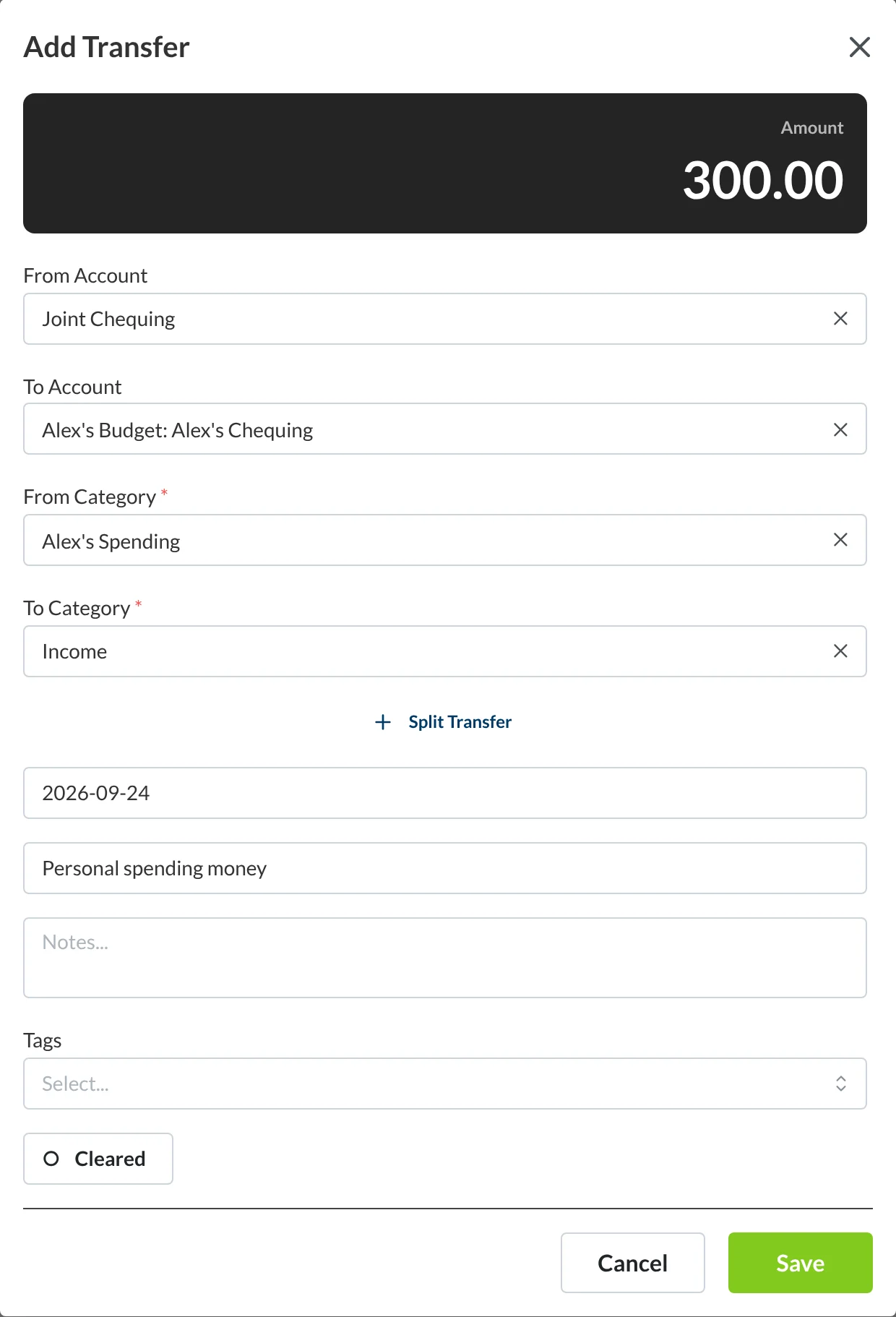
Once the paychecks are in, open the joint account and choose Add Transfer. Under To Account, the Transfer to other profiles group lists the accounts in your other budgets. Pick Alex's Budget: Alex's Chequing, take the money from the Alex's Spending category, and send it to Income so it shows up in Alex's budget ready to plan. Repeat for Sam.
-
See it arrive
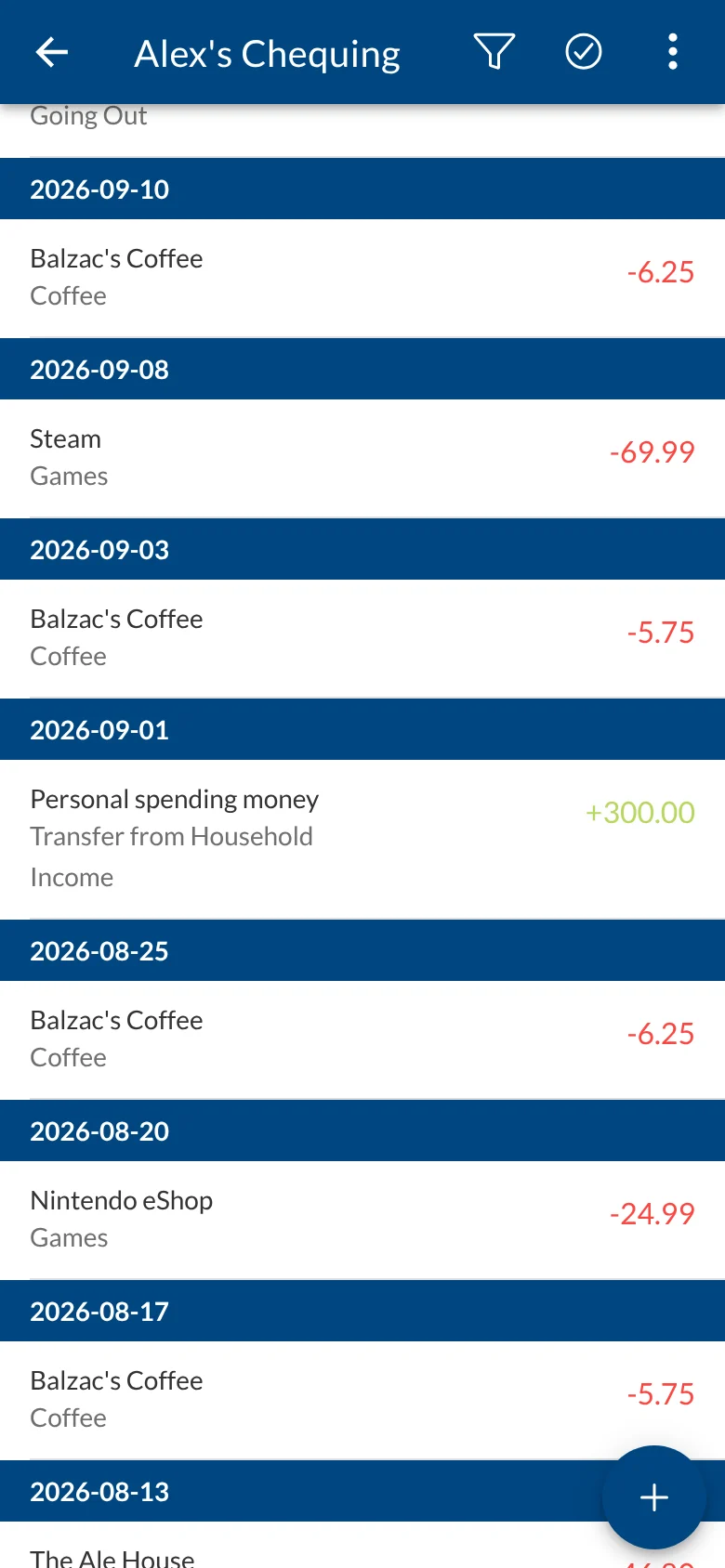
In Alex's budget, the $300 shows up as Transfer from Household. Both budgets stay balanced: Alex's Spending in the Household budget is spent, and Alex has $300 more to plan.
-
Plan your own money your own way
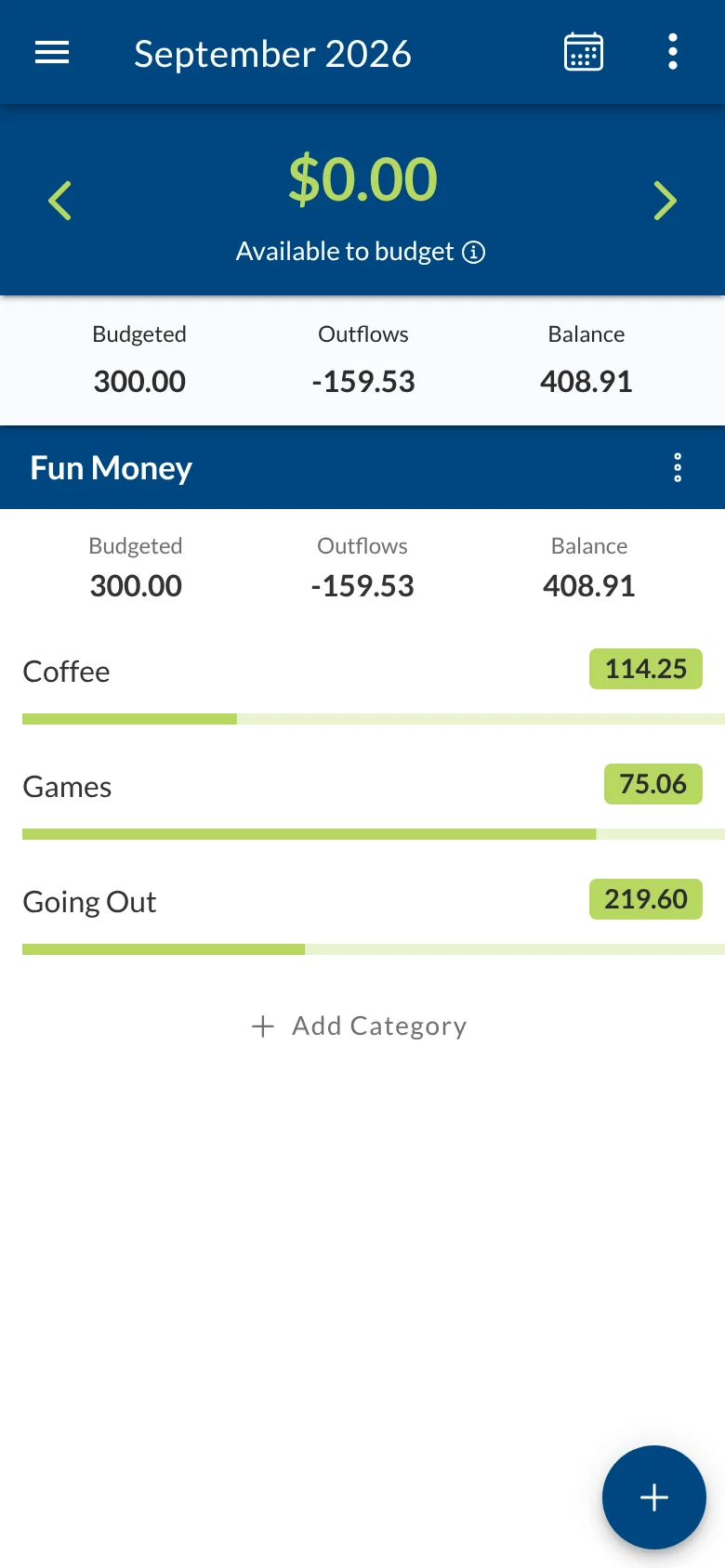
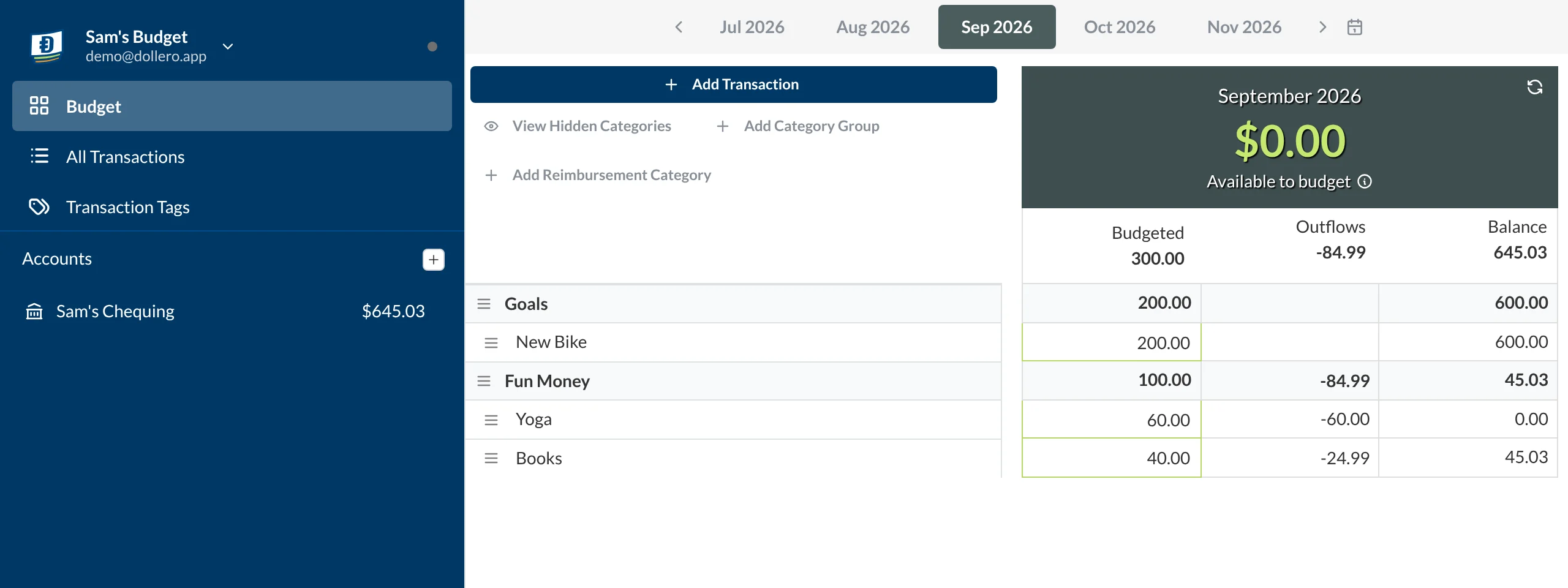
Each of you budgets your $300 however you like. Alex splits it between coffee, games and going out. Sam puts $200 a month toward a new bike, and because unspent money rolls over, that category has already grown to $600. Neither has to justify those choices.
-
Spend from the right budget
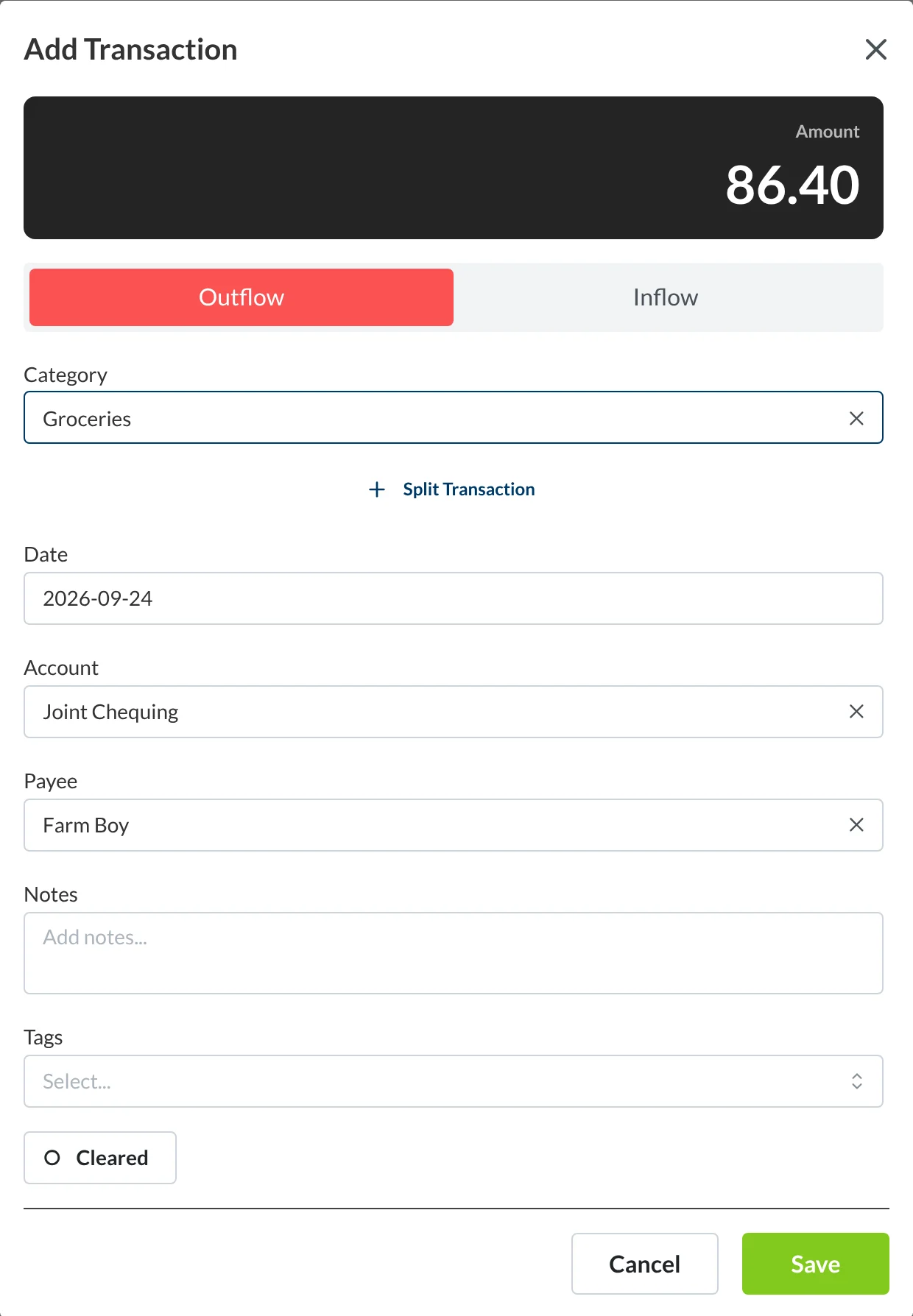
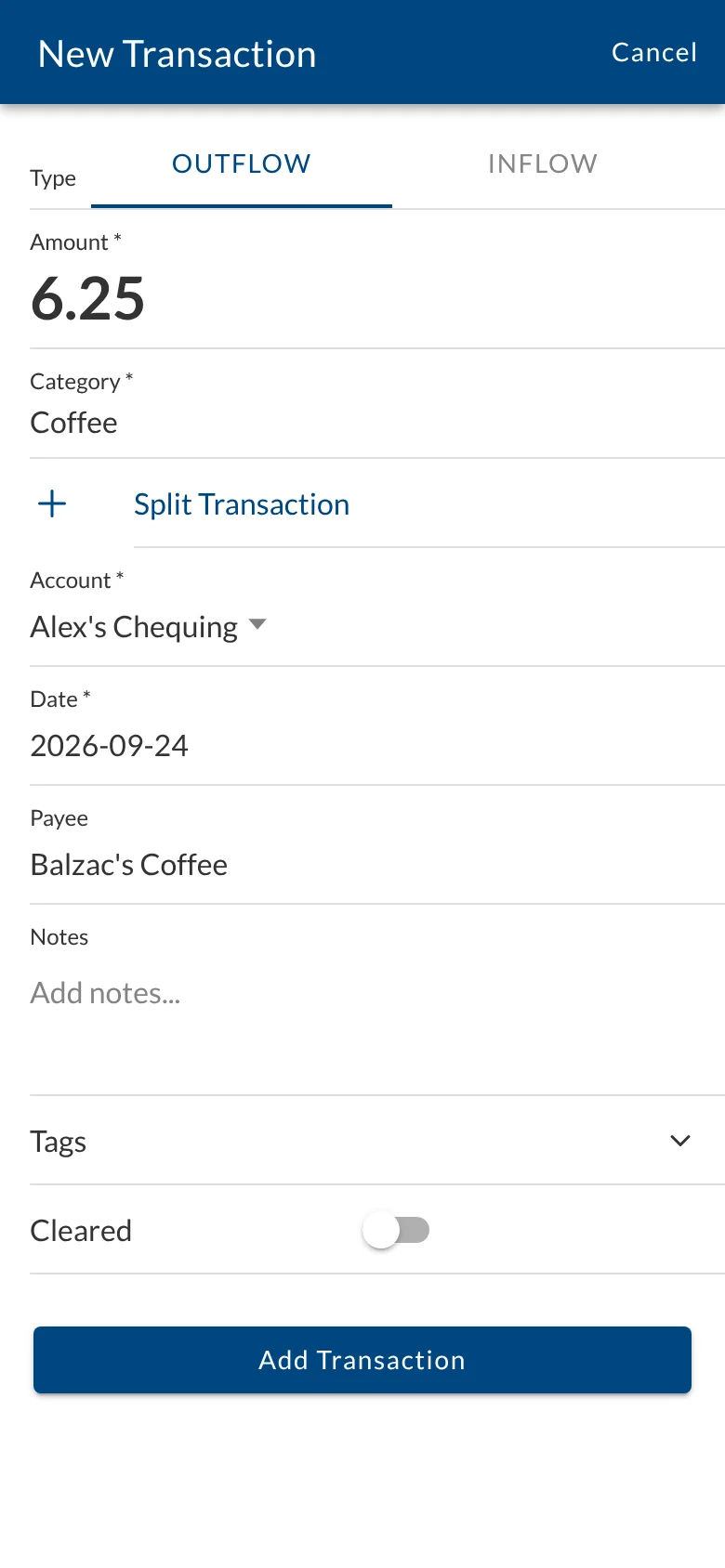
Shared costs go in the Household budget. Groceries, for example, come out of the joint account under Groceries. Personal purchases go in your own budget, so Alex records a coffee on his phone against Alex's Chequing. That's the whole system: the Household budget covers what you share, and your personal budget is yours.
Getting started this month
- Set up a joint account and redirect both paychecks into it.
- In Dollero, create a shared Household budget and invite your partner, then create a personal budget for each of you.
- List your fixed shared expenses and total them.
- Agree on your savings and debt priorities.
- Choose an equal personal spending amount for each of you, and transfer it to your personal budgets each month.
- Put a 30-minute budget meeting on the calendar for the start of next month.
Your first few budgets won't be perfect, and that's fine. What matters is that you're building the plan together, and that each of you still has money that's entirely your own.
The other options
-
Option 2
Fully joint
Everything goes into one pot. Bills, savings and spending all come from the joint account, and you agree on big purchases together.
- Paycheques go to
- The joint account
- Shared bills paid from
- The joint account
- Personal money
- Planned together in the shared budget
-
Option 3
Proportional contributions
Each of you pays your share of the shared bills into a joint account, by share of income (say 60/40) or 50/50, and keeps the rest.
- Paycheques go to
- Your own account
- Shared bills paid from
- The joint account, funded by both of you
- Personal money
- Whatever is left after your share
-
Option 4
Split the bills and settle up
No joint account. Whoever pays a shared bill records the other half as owed, and you pay each other back during the month.
- Paycheques go to
- Your own account
- Shared bills paid from
- Whoever pays, split 50/50 or by income
- Personal money
- Everything that isn't a shared bill